Get precision tile and grout restoration in Gilbert with calibrated pH chemistry, timed dwell, and counter-rotating brush agitation that pushes soils out of grout. We extract with elevated-temperature, balanced‑pressure spinner tools, restore to pH 7, and verify dry times with moisture meters. Then we apply deep-penetrating, surface-specific sealers and test hydrophobic performance. Safe, low‑VOC, eco cleaners preserve ceramic, porcelain, and natural stone. You receive flexible scheduling, live technician tracking, and accurate cure-time guidance—here's how we accomplish this step by step.
Critical Points
- Specialist tile and grout cleaning in Gilbert, Chandler, Mesa, Tempe, Queen Creek, San Tan Valley, and Apache Junction.
- Intensive scrub extraction with pH-balanced pre-sprays, counter-rotating brushes, and spinner hot-water extraction for high-traffic areas and heavy soil.
- Moisture testing, defect mapping, edge detailing, and post-cleaning neutralization to pH 7 for safe, residue-free finishes.
- Expert sealing: penetrating, material-specific sealers with bead-test verification and recorded curing periods to extend protection.
- Convenient scheduling including arrival windows, text confirmations, live tech tracking, along with weekend and same-day and emergency options.
Why Expert Tile and Grout Cleaning Is Essential
Though routine mopping offers relief, professional tile and grout cleaning handles what household methods fail to: embedded soil, biofilm, efflorescence, and detergent residues that retain grime and discolor grout. You're working with porous grout that wicks contaminants below the surface, creating persistent tile discoloration and grout odor. Professionals measure soil load, match pH-specific chemistry, and apply dwell times that break ionic bonds between soils and mineral substrates without etching glaze or eroding joints.
You receive targeted solutions: alkaline emulsifiers for grease, acidic descalers for mineral bloom, and oxidizers that neutralize odor-causing bacteria. Precision agitation drives penetration, and controlled rinse-recovery eliminates residues that home tools leave behind. Sealer application metrics-coverage rate, cure window, and vapor transmission-extend cleanliness cycles, stabilize color, and decrease future re-soiling and microbial growth.
Our Trusted Cleaning Process From Start to Shine
You'll begin with a thorough inspection and prep: surface identification, grout assessment, soil load testing, and masking to safeguard adjacent finishes. Next, we execute deep scrub extraction using alkaline-based or enzyme-based detergents, rotary agitation, edge detailing, and high-pressure hot-water recovery to purge embedded soils. To complete the process, we apply a penetrating sealer suited to your tile and grout porosity to prevent moisture, stains, and re-soiling.
Evaluation and Preparation
Before machinery is deployed, our technicians begin with a systematic inspection to document your tile, grout lines, and problem zones. We conduct a surface assessment to determine finish type, porosity, and wear patterns, then carry out defect mapping to log cracked tiles, hollow spots, lippage, and damaged or discolored grout. We record heavily-used pathways and passage edges that demand special handling.
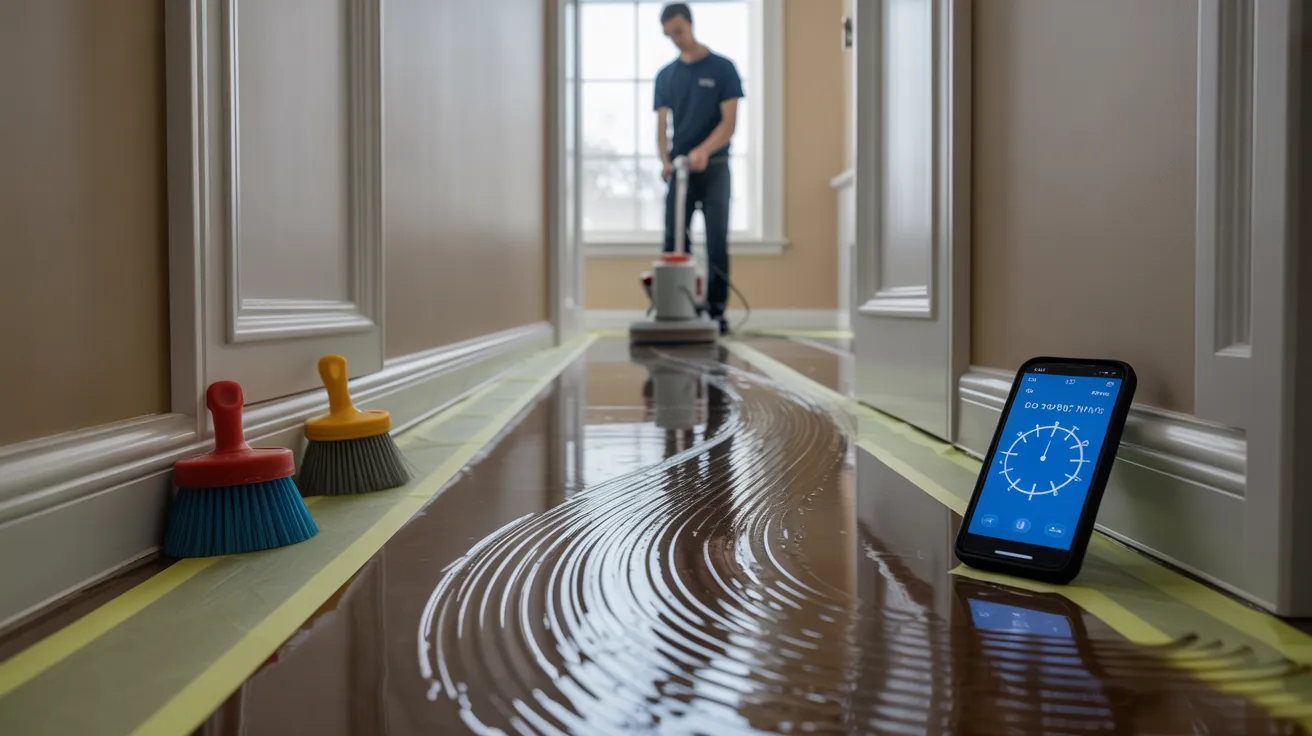
Next, we run moisture testing with calibrated meters to detect intrusions, efflorescence risks, or sealant failure. Readings guide chemical selection and dwell times, preventing over-wetting or bond issues. We handle furniture removal systematically-using protective pads, label placements, and isolate delicate pieces. All edges, baseboards, and nearby surfaces are masked. Dry soil is vacuumed, corners detailed, and thresholds taped to establish a controlled, contamination-free workspace.
Deep Scrubbing Extraction
Once the area is mapped, masked, and dry-vacuumed, we treat the surface with a pH-balanced pre-spray customized to your tile finish and grout porosity, then set a controlled dwell window for soil suspension. You'll see us check temperature and dilution to maintain chemistry within safe, effective ranges. Following this, we use counter-rotating brushes for heavy agitation, forcing solution into grout channels and microtexture to break down bonded soils. We detail edges with grout-specific nylon or silicone-carbide brushes to prevent more info scratching glazed faces.
After particulate are activated, we conduct thorough extraction using a sealed hard-surface spinner tool. Elevated temperature, even-pressure rinse jets shear residues while vacuum ports recover slurry in a single pass. We monitor recovery flow, modulate PSI by surface density, and perform targeted recuts where traffic lanes demand additional agitation.
Sealing for Enhanced Protection
Lock in the clean by applying a penetrating sealer carefully matched to your tile composition and grout absorption rate. We examine a small, inconspicuous area, confirm porosity, then measure the application to assured uniform film build without pooling. For dense surfaces, we apply porcelain sealants formulated to bond at a micro level, boosting stain resistance without altering sheen. For sanded grout, we use breathable formulas that prevent oils, dyes, and hard‑water minerals.
We ensure adequate dwell, remove excess, and cure under managed airflow to stop hazing. In bathrooms, kitchens, and entryways, we incorporate anti microbial coatings to resist bacteria and mildew between cleanings. Finally, we test hydrophobic performance with bead tests and note maintenance intervals so you can refresh protection before failure.
Environmentally Safe Products and State-of-the-Art Equipment
From the chemistry in your detergents to the PSI on our wands, we match eco-certified solutions with precision-tuned equipment to deliver thorough cleaning without sacrificing indoor air quality or surface integrity. You receive biodegradable cleaners formulated with chelating agents and surfactants that lift soils without leaving toxic residues. We measure dilution ratios by TDS and pH, ensuring active ingredients work efficiently while safeguarding finishes.
Our equipment with low VOC features sealed-jet extractors, high-efficiency particulate filtration, and adjustable heat exchangers. We adjust pressure from 300-1200 PSI based on grout porosity and soil load, then regulate flow with pulse valves to minimize water use. Enzymatic pretreatments dissolve organics; oxygenated boosters treat stains without chlorine off-gassing. The outcome: faster dry times, stable indoor air, and a dependably sanitized surface.
Specialized Treatment for Ceramic, Porcelain, and Natural Stone
You receive material-specific cleaning approaches that correspond to ceramic glaze hardness, porcelain density, and the porosity of natural stone. We apply pH-safe solutions-neutral for marble and limestone, slightly alkaline for greasy porcelain, and controlled formulas for ceramic-to extract soils without surface damage or cloudiness. Then we finish with targeted sealing and stain prevention, determining impregnating or topical sealers based on absorption rates and expected traffic.
Material-Specific Cleaning Techniques
Because each surface behaves differently to moisture, pH, and abrasion, material-specific techniques stop damage while providing a deep clean. For glazed ceramic, you'll remove soil with microfiber methods that trap fine grit without scratching, then extract using controlled heat and low-pressure rinsing to maintain glaze integrity. On dense porcelain, you'll tackle grout-line buildup using oscillating brushes with nylon filaments, followed by hot water extraction to remove embedded residues. For natural stone, you'll separate tiles by type-granite, marble, travertine-and adjust dwell times while preventing etch-prone actions. You'll detail grout restoration with precision scraping, then reprofile joints before applying color matching adhesives that blend repairs. Conclude by drying with air movers, checking moisture with a pin meter, and sealing compatible surfaces for lasting performance.
Ph-Safe Solutions Application
Once tool selection is established, chemical control determines whether soils release without damaging, bleaching, or weakening binders. You'll opt for pH neutral detergents for routine maintenance on ceramic and porcelain, reserving mildly alkaline builders only when grease loading demands it. For natural stone, verify surface compatibility and steer clear of acidic agents that destabilize calcite matrices and grout polymers. Conduct a test in an inconspicuous area, measure solution pH with test strips or a pH meter, and ensure rinse water returns near-neutral.
Dose accurately: adhere to dilution ratios, honor dwell times, and use non-abrasive pads. In commercial applications, implement consistent methods with labeled dispensers, SDS access, and conductivity checks on auto-scrubbers. Use softened water to limit mineral redeposition. Record results for consumer education, recording chemistry, pH, dwell, agitation, and rinse efficacy.
Sealing Methods and Stain Protection
Starting with initial curing and extending to routine maintenance, sealing techniques stop absorption, help soils come off more easily, and decrease etch or stain risks across ceramic, porcelain, and natural stone. You'll choose sealers based on porosity and use: penetrating fluorochemical sealers for dense porcelain, solvent- or water-based impregnators for ceramic grout, and breathable, stain-repellent sealers for natural stone. Test absorption with a droplet test, then clean to neutrality (pH 7), dry to target moisture (<2-4%), and apply thin, even coats with dwell times per spec. Wipe away excess to prevent haze and maintain color retention.
In high-traffic zones, incorporate preventive coatings when suitable; don't use topical films on polished stone. Schedule re-sealing according to performance-water-bead failure, darkening, or oil shadowing-usually 12-36 months. Maintain with pH-safe cleaners only.
Grout Protection and Sealing Services for Enduring Performance
Though clean grout seems great right after service, sealing it immediately is what preserves those results and blocks new staining. Pick a penetrating sealer compatible with sanded or unsanded grout, then permit full cure based on manufacturer specs to maximize sealing longevity. Water-repellent coatings minimize water absorption, hinder soiling, and make maintenance routines predictable.
Manage cleaning frequency depending on traffic: weekly for kitchens and entryways, biweekly for rarely used areas. Use pH-neutral cleaners; avoid bleach, acids, and oily soaps that deteriorate sealers or attract dirt. Spot-treat spills immediately to prevent dye migration. Maintain airflow to enhance dry times and minimize moisture load.
Conduct yearly checks: drip-test water; if it causes grout to darken in 10 seconds, reapply the sealant. Change deteriorated caulk at edges to block moisture intrusion and protect surrounding grout.
Booking, Service Areas in the East Valley, and What to Look Forward To
Before you book, check our East Valley coverage: Gilbert, Chandler, Mesa, Tempe, Queen Creek, San Tan Valley, and Apache Junction. We provide Flexible Scheduling with exact arrival windows, text confirmations, and live technician tracking. We provide Weekend Availability for active households and businesses, plus Same Day and Emergency Appointments when stains, spills, or odors require immediate attention.
This is what the process includes: we pre-inspect tile type, grout condition, and soil load; calculate square footage; and verify access to water and power. Service specialists safeguard baseboards, place corner guards, and stage containment as needed. We pre-treat with pH-appropriate solutions, scrub, extract with hot water, address edges, accelerate drying with air movers, and remove residues. You'll receive after-service moisture readings, cure-time guidance, and a maintenance plan tailored to traffic patterns.
Common Questions
Are After-Hours or Weekend Appointments Offered for Busy Families?
After-hours and weekend appointments are available. We feature evening bookings and weekend availability to match busy households. You choose a time frame; we confirm via SMS and email. Technicians show up with quiet, low-moisture equipment to minimize disruption. We check in advance access points, protect flooring, and stage contained work zones. Payment options include contactless checkout. Book online or call to reserve a slot; busy periods fill quickly, so reserve two to three days ahead.
Do You Relocate and Safeguard Furniture Before Cleaning and Return It After?
Yes. You get comprehensive furniture handling throughout the entire cleaning. Technicians move lightweight items, place protective covering on legs and floors, and tarp nearby surfaces to avoid abrasion or moisture transfer. They photograph placement, tag pieces, and protect and stabilize furniture while areas dry. After cleaning, they restore items to initial positions, wipe bases, remove coverings, and perform a final alignment check. For oversized or fragile pieces, they coordinate selective movement or no-move zones.
Are Discounts Available for Recurring Maintenance Plans or Multi-Room Bookings?
Indeed. You can obtain loyalty discounts on recurring maintenance plans and request bundle pricing for multi-room bookings. You pick monthly, quarterly, or semiannual intervals; we secure reduced per-room rates and prioritize scheduling. Multi-room bundles feature tiered pricing after square-foot thresholds, including grout sealing add-ons. We'll provide you with a written quote displaying base rate, frequency discount, and bundle deduction, plus any exclusions (such as repairs). Ask for a site assessment to optimize cost and scope.
Can You Provide Written Estimates and Detailed Invoices for Insurance or HOA?
Yes-you receive written insurance estimates and itemized invoices designed for insurers and HOAs. As attention to detail is essential, therefore you'll get scope, materials, labor rates, square footage, method specs, and IICRC references. I document existing conditions, before/after photos, and detailed pricing with timestamps. You approve estimates digitally, then receive a final itemized invoice corresponding to claim codes. I can adjust formatting to match HOA/insurer templates and provide W-9 and COI on request.
What Employee Background Checks and Certifications Do Your Technicians Hold?
Our team members maintain IICRC Floor Care certifications and manufacturer-specific training for tile, grout, and stone care. We conduct pre-hire and annual background checks, verify SSN and work authorization, and conduct drug screening. You get certification verification on request, including license numbers and completion dates. We also require ongoing CE credits and documented skills assessments on equipment use, pH chemistry, and sealant application. Supervisors evaluate jobs for compliance with safety protocols and workmanship standards.
Conclusion
You deserve floors that don't whisper about yesterday's "small incidents." With our precision-tuned PSI, pH-balanced chemistry, and heat-assisted extraction, we lift embedded soil without damaging grout lines. We'll tailor protocols to ceramic, porcelain, or stone, then seal micro-capillaries so moisture politely stays outside. Expect measured dwell times, edge detailing, and slip-safe rinse-downs. We service Gilbert and the East Valley on your schedule, document results, and deliver a maintenance roadmap—so your tile quietly shines, day after day.
Comments on “Certified Tile Technicians in Gilbert”